Bruce Lee's BaZi chart, computed with our own engine: Jia Wood day master born in the Dragon hour of the Dragon year — 庚辰 丁亥 甲戌 戊辰. The 伤官制杀 pattern behind the fighter-performer, and the luck decade that made the legend.
Guides to casting and reading the I Ching: the methods, the ritual, and how to make sense of what comes back.
Bruce Lee's BaZi chart, computed with our own engine: Jia Wood day master born in the Dragon hour of the Dragon year — 庚辰 丁亥 甲戌 戊辰. The 伤官制杀 pattern behind the fighter-performer, and the luck decade that made the legend.
A BaZi case study in 土重埋金 (Earth too heavy buries Metal): the wealth star 辛 is clearly visible in the month stem, yet three earth branches bury it. Why the name "wealth pattern" fails, and what to check before believing a visible star.
A BaZi case study in 财多身弱: two metal wealth stars 庚辛 revealed, a 亥子 water current behind them, and a 丙 fire day master born into deep winter. Why plenty of wealth stars is not the same as a wealthy chart — wealth needs a body strong enough to carry it.
Not every chart that shows a Seven Killings star and a Resource seal is a real 杀印相生. Chart A turns pressure into authority; Chart B lets it become burden. Three checks decide which one you are reading.
Officer and Seven Killings in one chart is not automatically 官杀混杂. Chart A removes the killing and keeps the officer clean; Chart B lets them crowd the day master. One test decides which one you are reading.
Wood-Fire brilliance (木火通明) is not about the amount of Wood and Fire in a chart. Two teaching charts, one real and one impostor, show how rooted Wood, bright Fire, and a touch of moisture separate the genuine pattern from a dry, scorching fake.
Metal White Water Clear (金白水清) is not about the amount of Metal and Water in a chart. Two teaching charts show how white metal, clear water, and a trace of warmth separate the genuine pattern from a cold, muddy impostor.
Water-Fire Completion (水火既济) is not just a chart that contains both Water and Fire. Two teaching charts show how rooted Water, rooted Fire, and an earth bridge between them separate true Completion from open war.
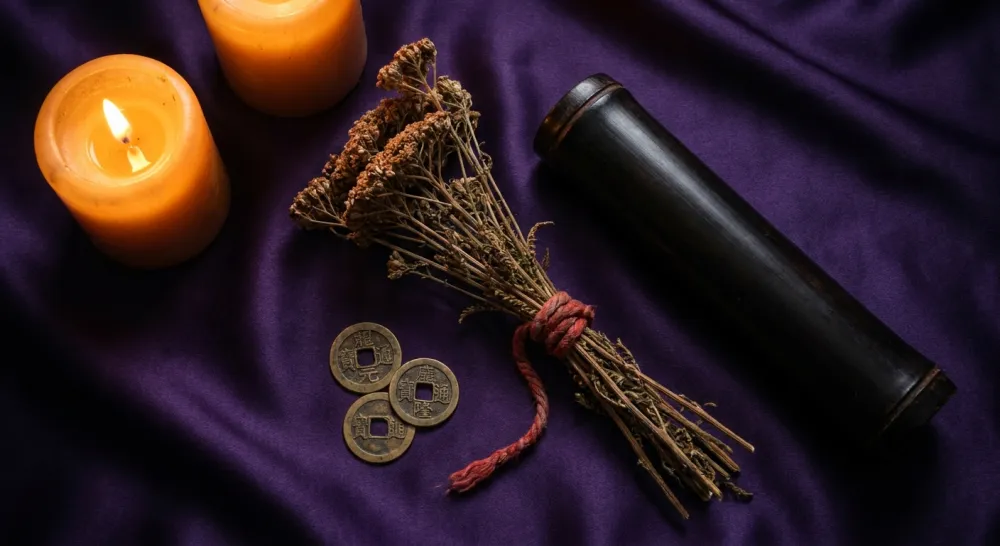
I Ching casting compared: three coins, yarrow stalks, or online. See the real odds of each toss and pick the method that fits you.
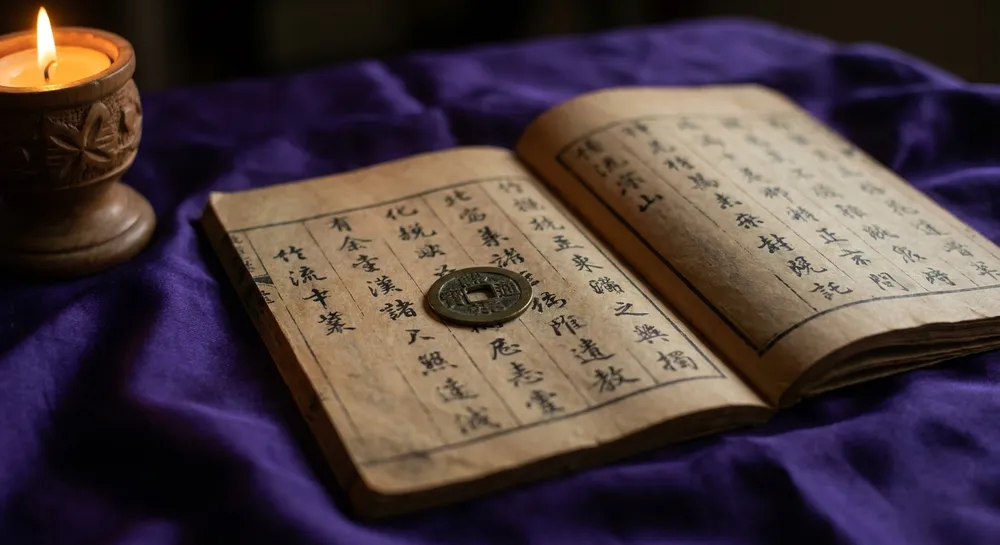
Got a hexagram and no idea where to start? Interpret an I Ching reading in four steps: the name and image, the judgment, the moving lines, and back to your question.
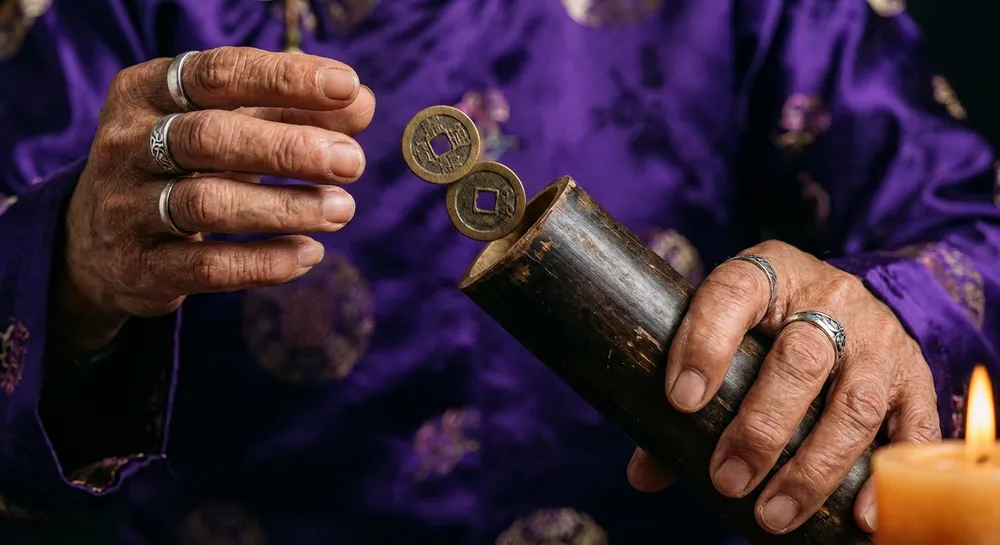
When to cast the I Ching, how to hold a question the oracle can answer, and the step-by-step casting ritual: six throws, six lines, recorded from the bottom up.
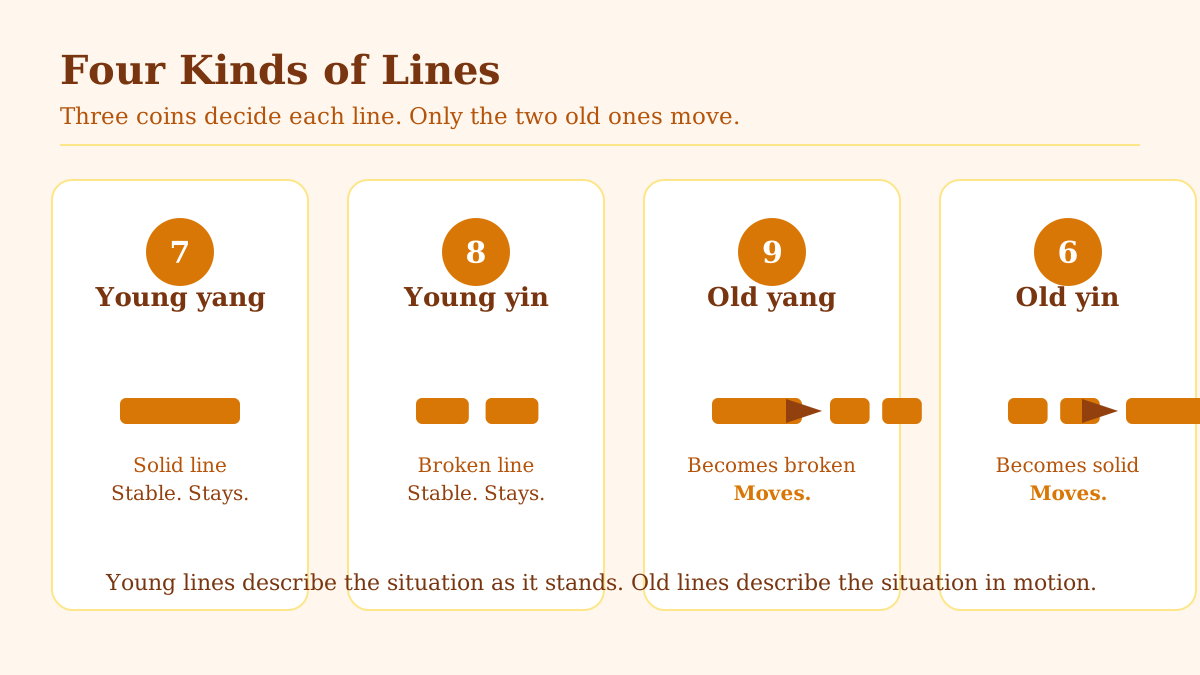
Changing lines and moving lines are two names for the same thing. What a moving line means, why old yang and old yin move, and how to read any cast that has them.
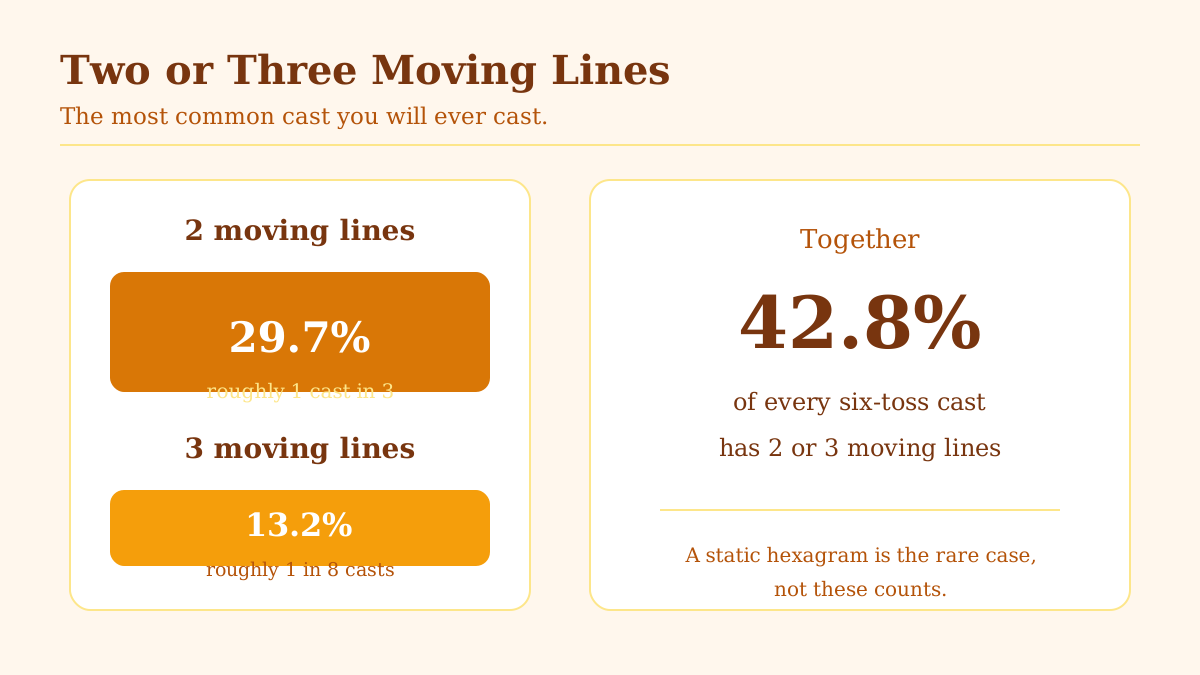
Nearly half of all I Ching casts produce two or three moving lines. How to read the original and derived hexagrams, which line leads, and how the schools differ.
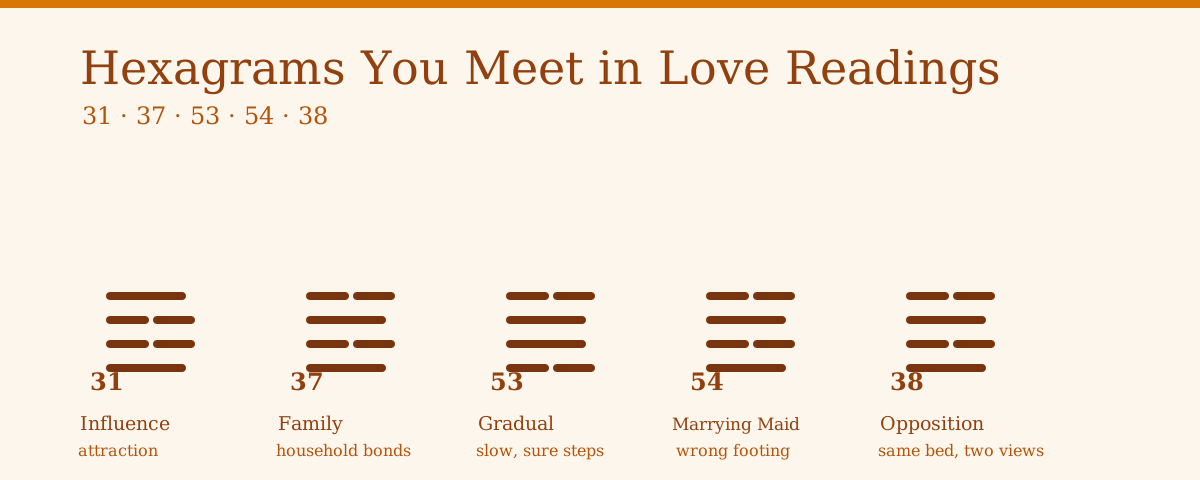
Love questions are the most common I Ching casts. Learn how to phrase a relationship question, which hexagrams show up most, and how to read your answer in layers.
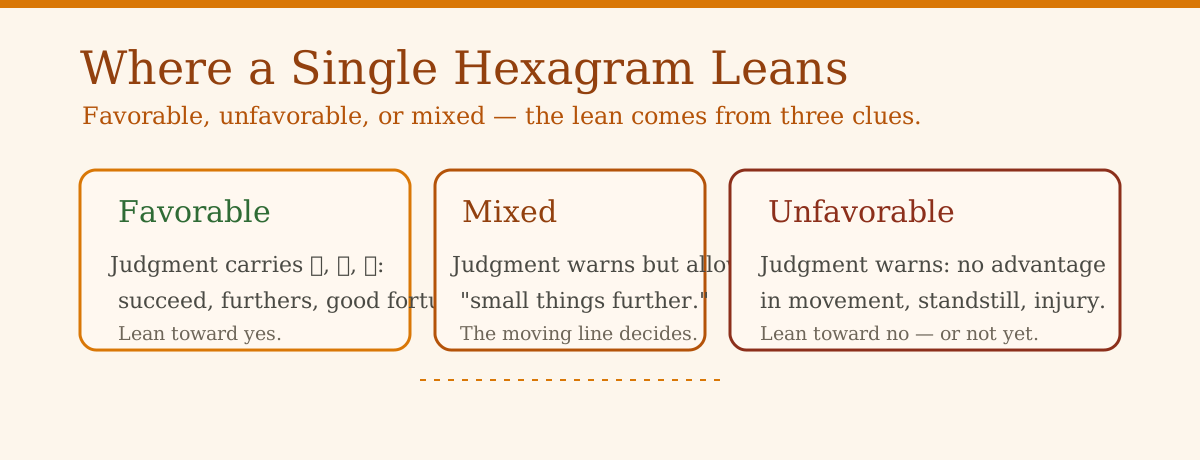
Can the I Ching answer yes or no? Learn the single-hexagram direct method, how to read favorable and unfavorable leanings, and which questions fit the format.
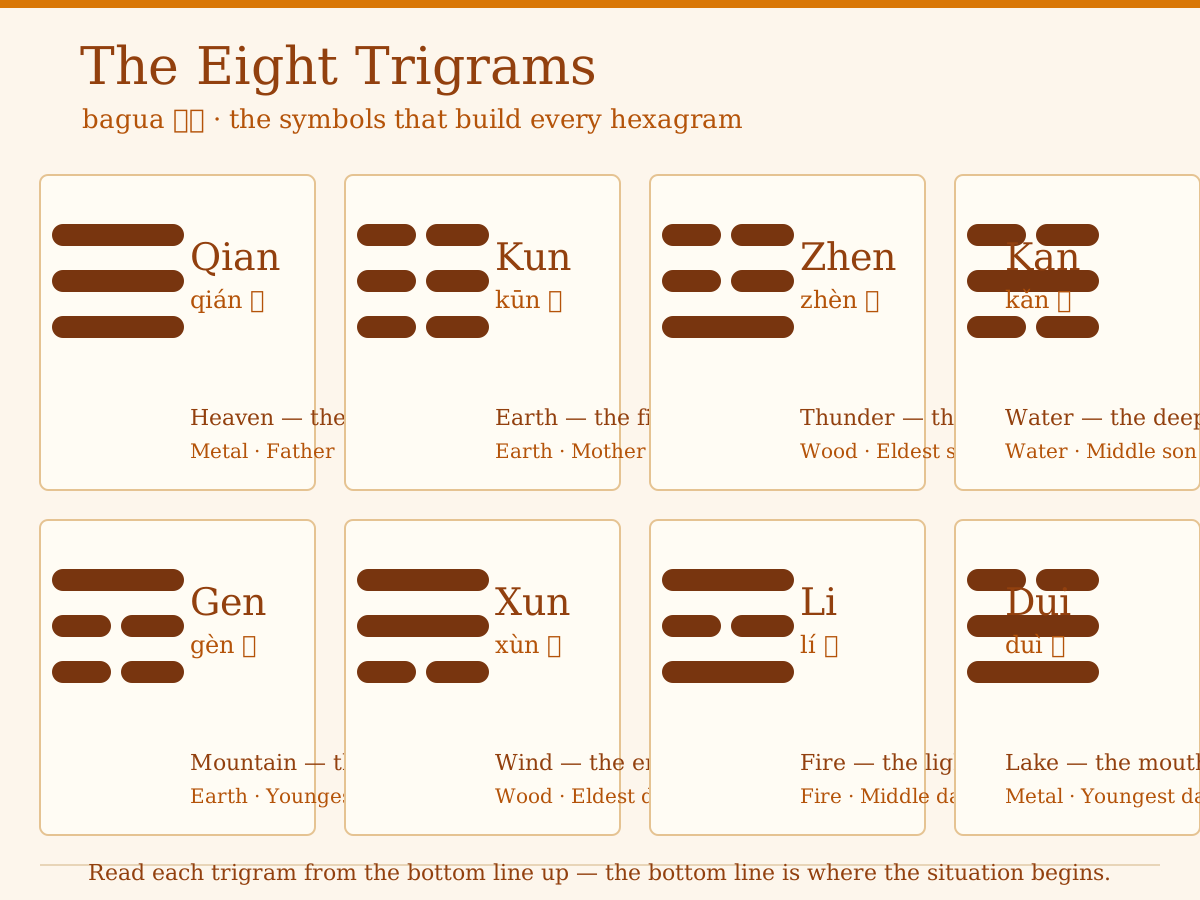
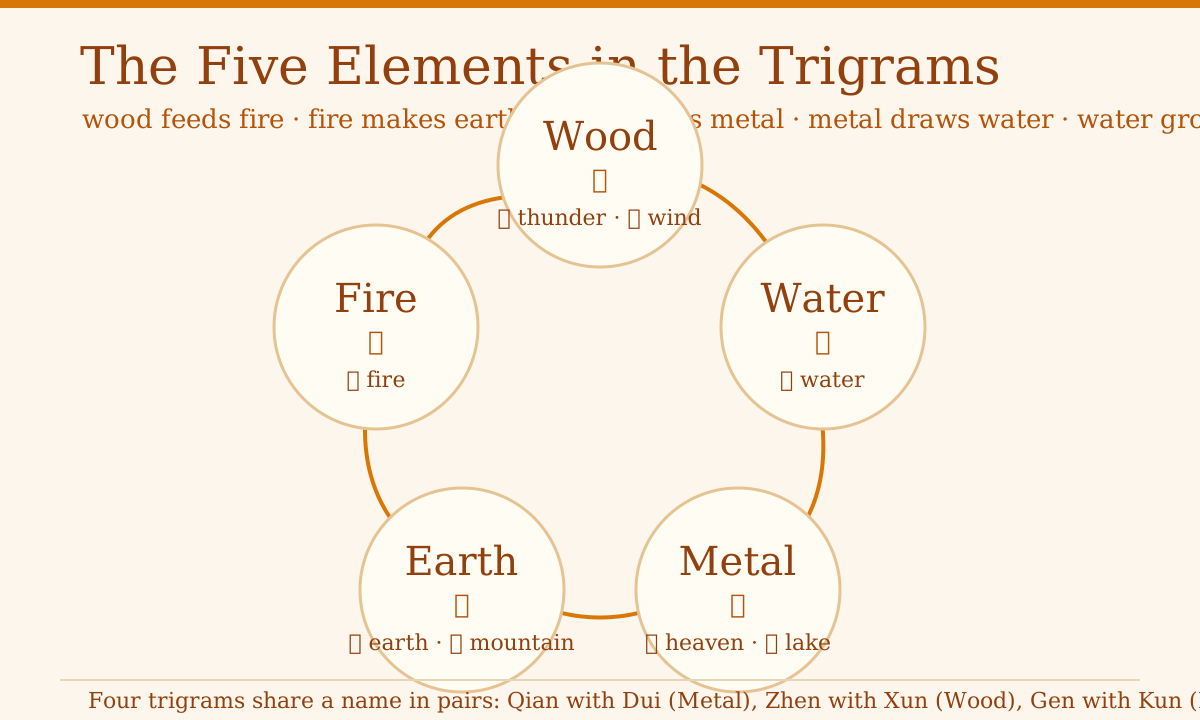
The eight trigrams (bagua) are the building blocks of the I Ching: three-line symbols for heaven, earth, thunder, water, mountain, wind, fire, and lake. What each one means, and how pairs of them build the 64 hexagrams.
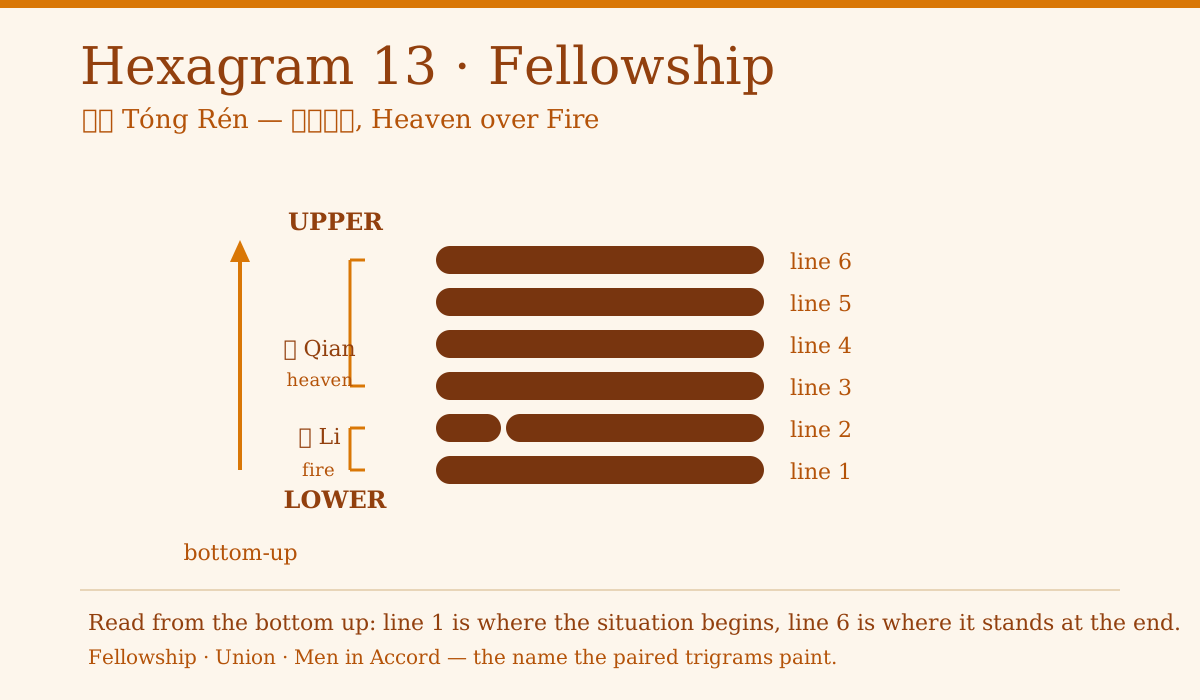
Hexagram 13, Fellowship (同人), joins heaven above fire: open alliances win where private circles fail. The judgment, all six lines, and what 13 means for love, work, and decisions.
New to casting? Begin with casting, timing and ritual — it walks through when to cast, how to phrase a question a hexagram can actually answer, and the six-throw procedure step by step. If you are weighing methods,coins vs. yarrow vs. online compares the three ways people cast, with the real probabilities behind each. Then take your first result to how to interpret your reading, the four-step read that goes from the hexagram's name back to your question.
Already comfortable with a cast? The yes-or-no guide covers the one question everyone asks first: whether a single hexagram can give a direct answer, and when the format fits. Moving lines are where readings get precise — what moving lines mean and reading two or three at once cover the cases the short answers skip. For the building blocks, the eight trigrams explains how the bagua combine into the 64 hexagrams, and Hexagram 13is a full worked example of one hexagram read end to end.
The BaZi series (the posts dated October 4) is a different track: case studies in reading chart structure — why a visible wealth star can stay buried, why many wealth stars do not mean a rich chart, and how to tell a real pattern from a lookalike. Read those with the free BaZi calculator open; each post includes a chart you can check every claim against. And if you want the classical text itself rather than guides, the 64 hexagrams reference lists every hexagram with its judgment.